Category: Essays

  • Child Marriage in India

    Child Marriage in India

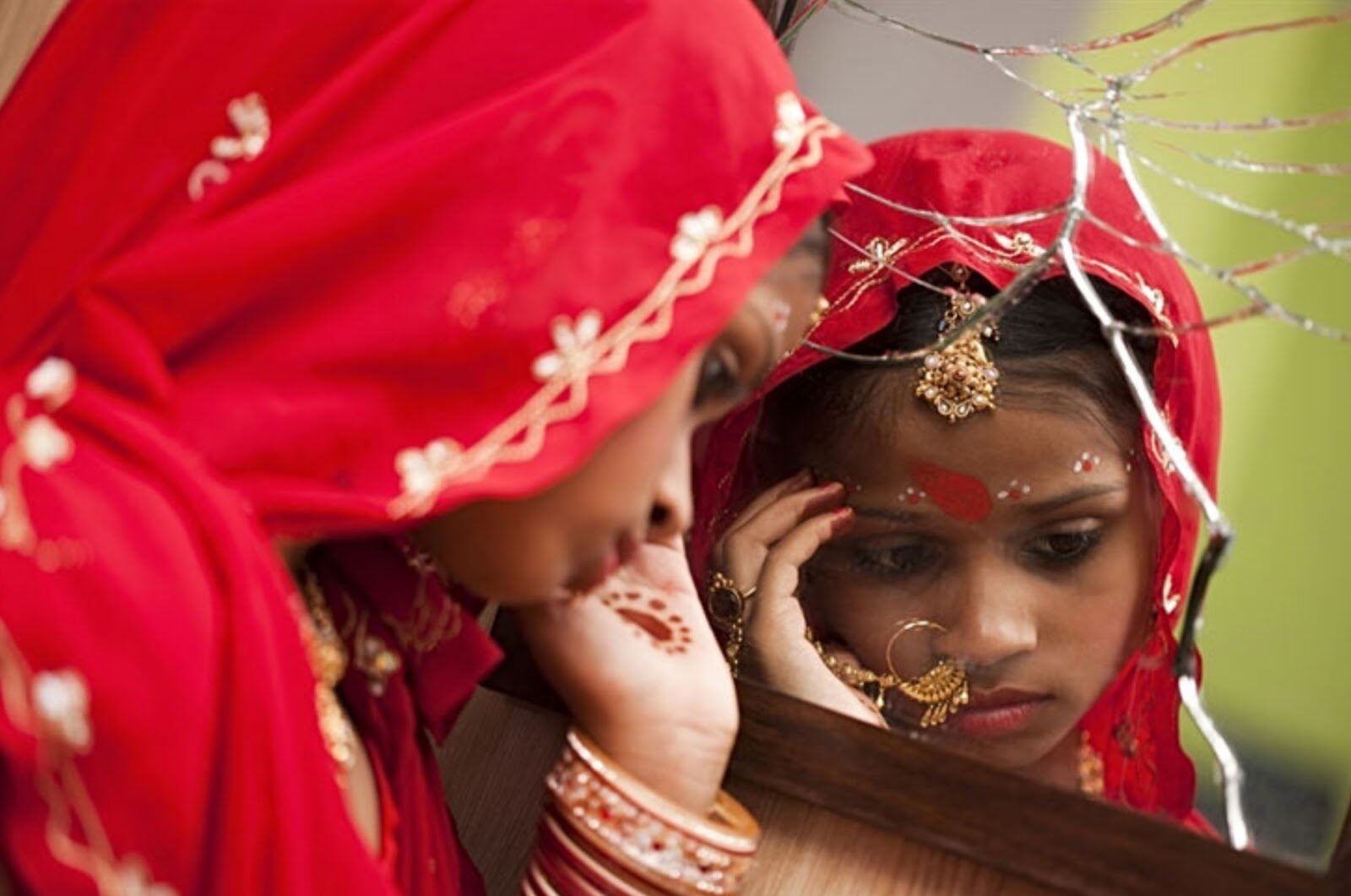
    India is home to the largest number of child brides in the world: 223 million child brides – a third of the global total. While it is illegal for girls under the age of 18 to marry in India, estimates suggest that at least 1.5 million girls under age 18 get married in India each year. Nearly 16 per cent of all adolescent girls aged 15–19 are currently married. Recent evidence, though sparse, highlights the persistence of family-arranged marriages without meaningful consent.

                           It’s the story of my great grandma, Motabai. My mother used to tell me about her. Informly, she got married when she was sleeping in her babyhug and formally when she attained 12 years. She was prettiest among all the women’s living in ‘Sevabhaya Tanda’. She had bluish eyes and curly hair. Everyone in Tanda worshiped her as she resembled Goddess Durga. And every year, Maharaja Ranjit Sing from Jodhpur used to see her dance at Holi festivals. 

                         Year 1919 was the end of world war I and she died at the age of 17. It was her 5th childbirth delivery. Due to her social influence on the Banjara community, Britishers had to set up a committee to investigate the matter. In 3 months, a report came and her death was a result of early childhood marriage. After 10 year, in 1929 Britishers passed Child Marriage Restraint Act to curtail this practice.

                  After 75 years of Independence, on one hand we have been celebrating ‘Azadi ka Amrit Mahotsav’ and on the other hand, children in our country are getting married on every single day. They do not even attain 18 years. In some cases, parents of the two children (the girl and boy) arrange a future marriage. It ends their childhood. It negatively affects children’s rights to education, health and protection. These consequences impact not just the child directly, but also their family and community. Child marriage places them at high risk of violence, exploitation, and abuse. It affects both girls and boys, but it affects girls disproportionately.

                        Child marriage is widespread across India, with nearly half of brides married as girls. And it is still prevalent in rural areas(48%)and in urban areas(29%). According to the National Family Health Survey 40% of the world’s 60 million child marriages take place in India. Also India has the 14th highest rate of child marriage in the world, according to the International Center for Research on Women. 

                      Child marriage, a deeply rooted social norm is the result of the interplay between economic and social forces. Usually a combination of poverty, the lack of education, continued perpetration of patriarchal relations encourages child marriage. Some Studies show that lack of education is a big determinant of the age of marriage. Around 45% of women with no education and 40% with primary education married before the age of 18.

                 Poverty is another reason behind early marriages in rural areas. Most families have large family sizes and most parents are unable to take care of their children. Thus, early marriages are seen as opportunities to reduce this burden. Apart from poverty, weak law enforcement, patriarchal norms and concern about family honor are factors contributing to early marriage. There are also variations across different groups, particularly excluded communities, castes and tribes – although some tribal groups, have lower rates of child marriage compared with the majority population.

             As a result of norms assigning lower value to girls, they are expected to undertake household responsibilities in preparation for their marriage. They are often seen as a liability with limited economic roles. Women’s work is confined to the household and is not valued. In addition, there is the problem of dowry which get increses as age of child and hence, it perpetuates child marriage.

                 In 2019, I had interviewed some girls from Budhwar Peth along with my colleagues and members from recognised NGOs. It was shocking for me that many poor families sold thier daughters into prostitution for sack of money and run the family.

               During COVID-19 pandemic, many people in India have lost their jobs and life savings. This has forced parents to marry off their daughters at an early age to reduce the financial burden. As per the data published by ChildLine India, Madhya Pradesh recorded 117 child marriage cases and 204 in Telangana in just three months of the lockdown from April to June 2020.

                Child marriage negatively affects the Indian economy and can lead to an intergenerational cycle of poverty. Girls and boys married as children more likely lack the skills, knowledge and job prospects needed to lift their families out of poverty and contribute to their country’s social and economic growth. It also leads girls to have children earlier and more children over their lifetime, increasing economic burden on the household. According to estimation, child marriage cost economies at least 1.7% of their GDP. It also increases total fertility of women by 17 percent and it hurts developing countries battling high population growth. 

               A girl who is married as a child is more likely to be out of school and can’t develop her personality. She is more likely to experience domestic violence and have children when she is still a child. Like Motabai, there are more chances of dying due to complications during pregnancy and childbirth.

                 While there has been a decline in the incidence of child marriage nationally(from 54% in 1992-93 to 33% today). This significant reduction of child marriages in India can be attributed to multiple factors such as increased literacy, better access to education for girls, strong legislation and migration from rural areas to urban centres. Also proactive government investments in adolescent girls, and strong public messaging around the illegality of child marriage and the harm it causes are also among the reasons for the shift.

             Some evidence shows that critical game changers for adolescent girls’ empowerment include postponing marriage beyond the legal age, improving their health and nutritional status, supporting girls to transition to secondary school, and helping them develop marketable skills. It helps them to realize their economic potential and transition into healthy, productive and empowered adults.

               Government of India has already enacted laws like Child Marriage Prohibition Act 2006 and started many initiatives like Beti Bachao Beti Padhao, Sukanya Samriddhi Yojana to incentivize the people to give equal treatment to their daughters as their sons. Some national schemes like Dhanalakshmi, Rajiv Gandhi Scheme for Empowerment of Adolescent girls (SABLA) addresses the problem of child marriage directly and indirectly. Also the Conditional Cash Transfer(CCT) scheme tries to ensure education of girls.

                 Basically, child marriage in India is a complex problem involving socio-cultural and structural factors. It needs ‘scale-up strategy’ to prevent child marriage and increase adolescent empowerment by working with government, partners and relevant stakeholders from the national level down to the district level. Among all, higher education, imparting life skills and employment opportunities should be ensured. This will give them financial freedom and family decision making power. 

                   Government has a vital role to end child marriages. They needs to enforce Prohibition of Child Marriage Act, 2006 strictly in true letter and spirit. It also needs strenthen child marriage telephone hotline as implemented by Odisha Child Marriage Resistance Forum. Government’s partnerships with civil society organizations and communities are key to supporting community mobilization efforts and mindset changes. In addition to this, partnerships with the media(like the Satyamev Jayate show by Amir Khan) are very important for raising awareness.

                    Recent analysis by UNICEF points out that India is home to the largest number of child brides in the world. Nearly 223 million child brides – a third of the global total. Around 16% of all adolescent girls aged 15–19 are currently married. Recent evidence highlights the persistence of family-arranged marriages without meaningful consent. 

                          Child marriage is included in SDGs, under Target 5.3 “To eliminate all harmful practices, such as child, early and forced marriage and female genital mutilation”. And on global level, UNICEF and UNFPA have joined forces through a Global Programme to Accelerate Action to End Child Marriage, where for the first time existing strategies in areas such as health, education, child protection, nutrition and water and sanitation have been brought together to address child marriage in a holistic manner. 

                 To achieve the commitment of ending child marriages by 2030, it becomes important to integrate the COVID -19 responses with child marriage elimination efforts. Some scholars argued that incresesing marriage age, recognising marriatal rape, focus on girls education and democratisation of child elimination at grassroot level are important milestones to achieve in times to come. End to child marriages is a long journey. There are many beautiful ‘Bharat Mata’ who want to live their life. The holy God gifted us to make this ‘Bharat Bhumi’ more prosperous. Till then we need to make sure that another ‘Motabai’ should not become the victim of child marriages. 

    🔅🔅🔆🔅🔅

    Note: This particular essay was written for ‘Shinkshanganga IAS Forum’.

    🎯 References:

    1. Report/Case Study:
      1. Child Marriage Country Profile India, 2021 by UNICEF 
    2. Online Articles:
      1. UNICEF:
        1. Ending child marriage and adolescent empowerment
        2. Child marriage, At UNICEF, we believe that child marriage is a form of violence against children. Our aim is to avert 500,000 child marriages in the region by 2021.
      2. The Hindu Editorial:
        1. Age and marriage: On raising the age of marriage for women dated December 20, 2021.
        2. The way to end child marriage by Sunny Jose and Mohd Imran Khan dated JUNE 15, 2022 
    3. UPSC Study Material
      1. Dristi IAS: Social Issues>Menace of Girl-Child Marriage in India.
      2. InsightIAS: Issues related to Children>Child Marriage
      3. Vikaspedia Article on Child Marriage
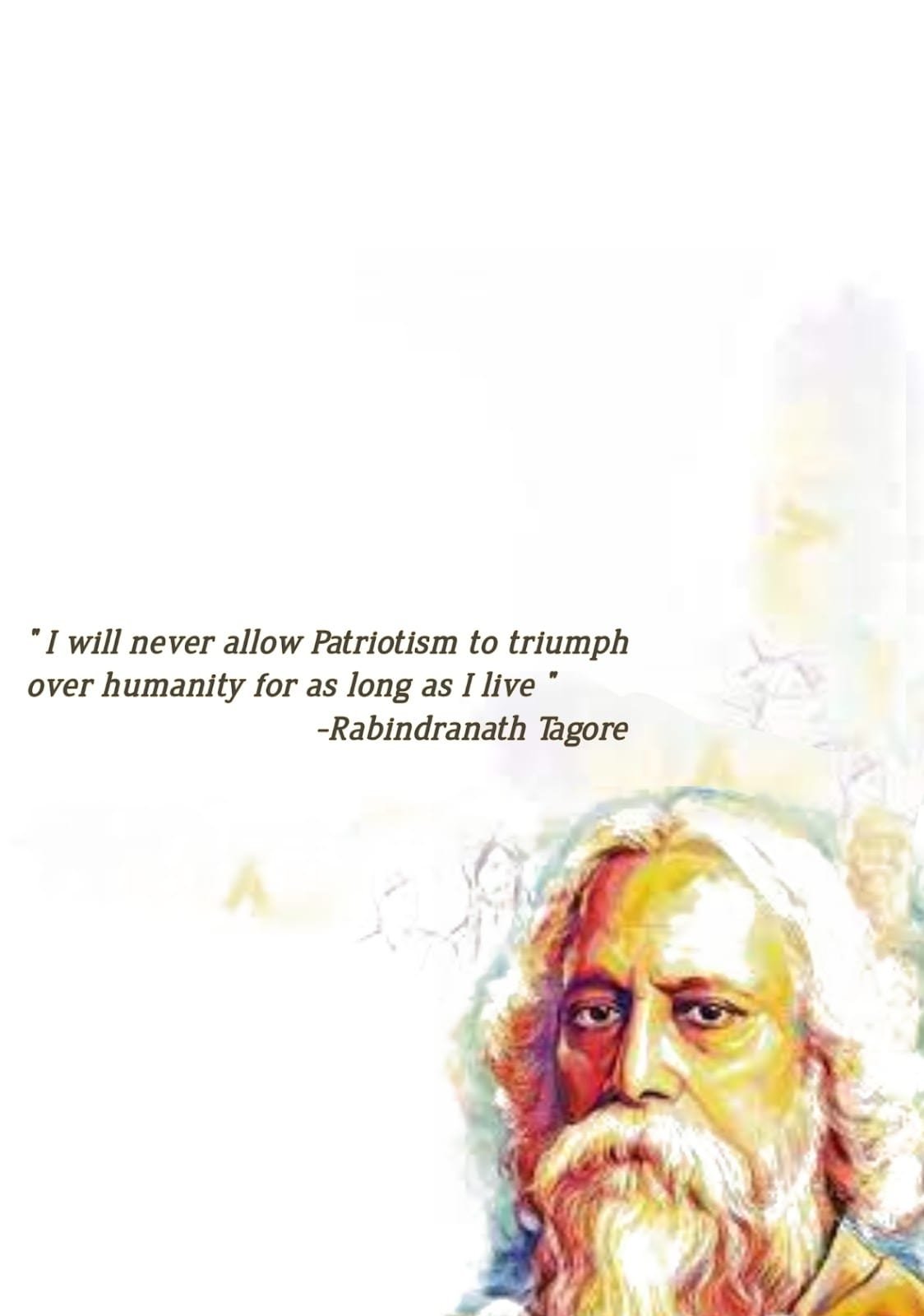
  • Talking with Tagore on  ‘Nationalism’

    Talking with Tagore on ‘Nationalism’

    It was mid-March 2022. The spring season was at its peak to start. And after 2 years of online education in the backdrop of Covid-19, we were in an offline education system. We knew that there would be no ‘Google Baba’ in final exams. All my classmates started worrying about it, so I’m I. And everyone started attending regular lectures. I and my friends from Niljyoti Society also started going to college regularly. 

    It was 11:00 am on Thursday and we had a Political Science lecture. We all went to the PG6 classroom. Our faculty came to the class and wrote ‘Chapter 1: Nationalism’ on the blackboard. She gave the attendance sheet to Mukta, one of the regular students and told her to circulate it in the classroom. And then she started firing words like a Pub-G Warrior. I couldn’t catch a single word. 

    Last night was a bit unusual for me. I went to bed at 11:15 pm but I couldn’t sleep till 4:00 am. Thus, no doubt that I was sleeping in the classroom, like a ‘Kumbhakarna‘. And I went into a deep sleep. A stage when you’re tired and you feel like you wanna sleep, you’re actually in heaven. 

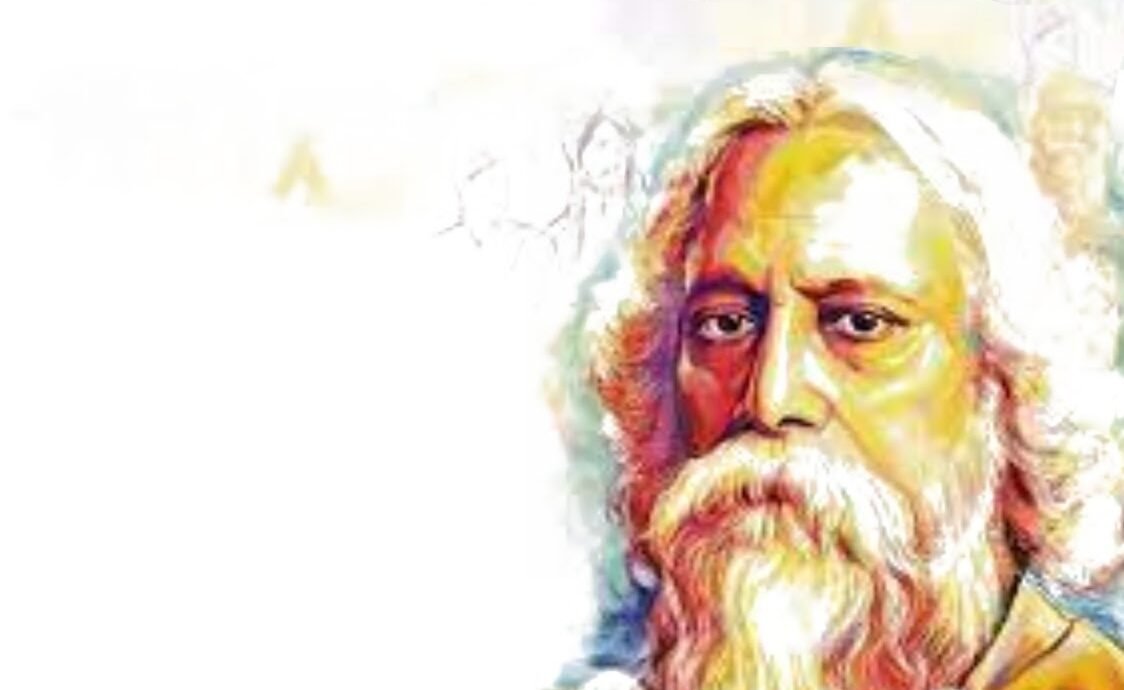
    In my dream, I felt like I was listening to a 40-45-year-old fellow, with a long white beard. Probably he was Tagore. A man who wrote the national anthem of two nations. And there were 6-7 gentlemen who were just sitting near him on a large podium. They looked like Gandhi, Nehru, Patel, Savarkar, Ambedkar and Bose.

    Tagore was going to talk about nationalism to the people who died in World War II. The surrounding atmosphere was cool. The birds around were chirping. Children were playing in the open air. This was a replica of Santiniketan 2.0 in heaven. Before he started his talk, I googled its definition.

    Google said, “an identification with one’s nation and support for its interests, especially to the exclusion or detriment of the interests of other nations.”

    He started his talk; “I wrote an essay in 1917 titled ‘Nationalism in India,’ in which I consider the specific challenges faced by India in developing a national self-consciousness as well as the need for that consciousness to be grounded in Indian cultural sensibilities. And even today the real problem of India is not political, but it is social. It is a condition that prevails not only in India but among all nations. I am not against one nation in particular, but against the general idea of all nations.”

    “What is the Nation?” He asked the audience. And then after a few seconds, he answered himself. 

    “….the wisdom of the Nation is not in its faith in humanity but its complete distrust… Yes, this is the logic of the Nation. And it will never heed the voice of truth and goodness. I considered the ideals of nationalism inherently problematic because it leads to moral corruption, moral degeneration and mistreatment and are contrary to simple living or moral ideals of individuals. In my writing I have utterly said that nationalism was something that serves nations’ self-interest; it doesn’t serve the individual self-interest, which is not at all acceptable. It is a very jingoistic or xenophobic response to the explanation of the nationalism that perpetuates violence and stress between communities and the state or the nations.

    Now he increased his pitch. I thought he was attacking the idea of nationalism itself. 

    “According to me, nationalism by itself cannot act as a magic wand capable of conjuring away the numerous divisive forces. Nationalism is a great menace, if blown by force, would wreak havoc in India. It is the particular thing which for years has been at the bottom of India’s troubles. It is not ‘a spontaneous self-expression of man as a social being, but rather a political and commercial union of a group of people, in which they congregate to maximise their profit, progress, and power; it is the organised self-interest of a people, where it is least human and least spiritual”. I see nationalism as a recurrent threat to humanity, because, with its propensity for the material and the rational, it trampled over the human spirit and human emotion; it upset man’s moral balance.

    “By the way, Patriotism is a good substitute for nationalism,” said Netaji Bose.

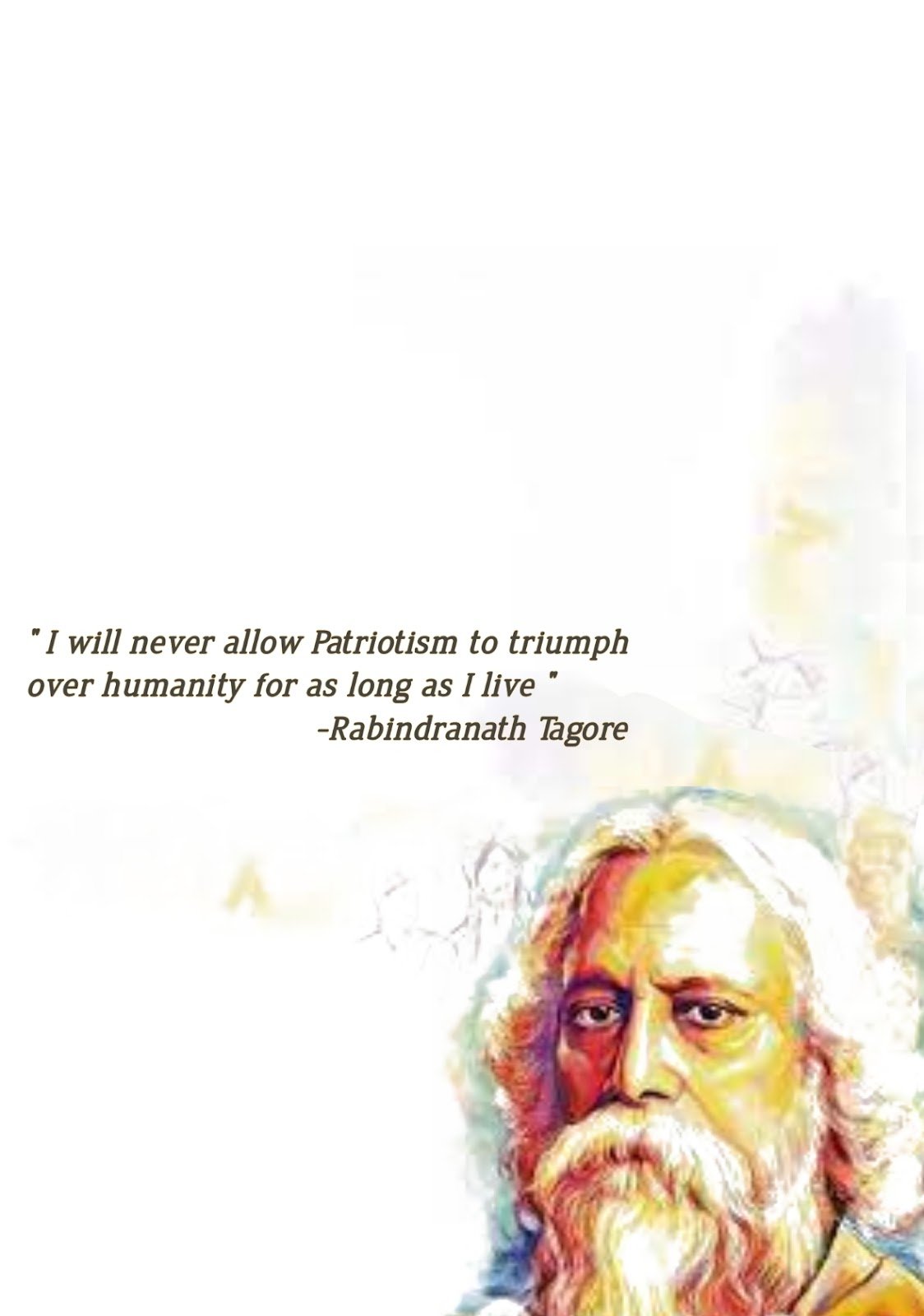
    “Apparently yes, but patriotism can’t be our final spiritual shelter. I will not buy glass for the price of diamonds and I will never allow patriotism to triumph over humanity as long as I live. 

    “Do you know why I’m saying so?” He looked around the podium and started speaking again in a normal tone.

    “Patriotism, whenever power is passed up, would unleash devastation in India. Patriotism isn’t an unconstrained self-articulation of man as a social being but instead a political or business association of a ground of individuals in which they gather to expand their benefit, progress and force. It is simply the sorted out enthusiasm of a people, where it is least human and least otherworldly. I regarded patriotism as  a repetitive danger to humankind because of its affinity for the material and the normal it stomped on the human soul and human feeling. It agitates man’s ethical parity.”

    He asserted firmly, “India has never had a genuine feeling of patriotism and that patriotism has for quite a long time been at the base of India’s difficulties. My perception of nationalism has mainly relied on ancient Indian philosophy, ‘a Visva-Bodh’-a world-consciousness, in which every country would keep alight its lamp of mind as its share in the illumination of the whole world or humanity. A universal society, where the world was accepted as a single nest. In this way, I was striving to dissociate myself from the general belief of nationalism and trying to associate it with ideas such as peace, harmony and welfare in my essay nationalism. If anyway India decides to contribute to the world; it should be only in the form of humanity.  

    I got a little bored listening to an old man. There was nectar in a large pot, freely available for everyone. At that moment, I thought I should call them ‘Anti-National’. These people were having fun in heaven and we didn’t even have proper drinking water in our locality. While I  was about to create chaos, I looked around. But there was no one to pay attention to me. So with the greatest disappointment, I drank two glasses continuously. I was the best opportunistic person on the earth, to enjoy nectar and represent my countrymen. 

    And again I started listening to him.

    “My idea of humanism goes beyond any boundaries or barriers and seeks at large a common place where humanity comes before any other kind of identity. The saints such as Nanak, Kabir,and  Chaitanya ignited the flame of humanism in Indian minds. But unfortunately, it faded over time with an aggressive rise of racism and caste-based disintegration of our society.”

    He got a little cough. Sarojini Naidu, looked like my grandma.  She brought a glass of water for Tagore. He sipped twice and again started talking. 

    “Yesterday I was reading the ‘Glimpses of India by Nehru’ and today I certainly claim that India has never had a real sense of nationalism and that nationalism has for years been at the bottom of India’s troubles. I have gone through New Education Policy 2020. There was no mention of value education. Indians should fight against the education which teaches them that a country is greater than the ideals of humanity. I’m I right, Ambedkar?

    Yes, man! Ambedkar answered softly. 

    He added, “Nationalism was the breeding ground for imperialism. I also found the obsession with nationalism as a source of war, hatred and mutual suspicion between and among the nations. And I viewed nationalism as a danger to humanity. My animosity to nationalism is not that I was not patriotic or that I was anti-West. I believed in a symbiosis of the East and West, a ‘deep association’ or a living relationship between the two cultures; a creative unity that was possible only when the East had discovered its soul and its own identity.”

    Gandhi raised his  hand. Tagore stopped for a moment. 

    “Gurudev, can I clarify the misconception around Ramrajya?”

    “Yes please…!” Tagore accepted it positively. 

    “I was saying the same thing in my discourse of Ramrajya. I want everyone to preach and practise  the non-violence at the individual level. This is the  true decentralisation of humanity. “

    While Gandhi was clarifying ‘Ramrajya’, Nehru raised his  hand.

    “Can I add something to your discussion?” He asked gently. 

    “Yes ,yes… Go ahead… ” Tagore responded positively. 

    “We should follow our Upanishads and our saints who taught us the idea of fraternity, brotherhood and equality, which can make any country strong. It is really important for our divided society. Part of how weIndianss get intimidated by the idea of westernisation, forgetting our roots has become the major reason why we get confused with the true essence of national self-consciousness.”

    Savarkar stopped Nehru in between and said;

    “You don’t teach us about western culture. I have seen your photos with an English lady, you too had a cigar in your hand.”

    “Where did you see them?” Patel asked.

    “I received it on my WhatsApp Bruhh…!”

    “People made me a PM candidate against Nehru…” Patel said. 

    “Nehru Ji, you continue…” He added.

    Nehrustatedd ,“There is a need to prove our humanity by solving the internal differences through mutual help and finding some true basis for reconciliation. The concepts and practices of civilization, nationalism, and community are directly concerned with the nature of modern political power and its underlying assumptions about human life.”

    With a little pause in the air, Swami Vivekananda said, “When you borrow things that do not belong to your life then they only serve to crush your life. Therefore, India, in my opinion, should follow her destiny rather than merely imitate the west.”

    For a moment, everyone went into silence.Dr. Ambedkar took an opportunity and added, “The ideas like purity and impurity of race have massacred millions over centuries. Even two World Wars and other racial conflicts were provoked based on the false notions of superiority. Nothing as such has existed in this world where men and women can be straightway divided and disintegrated.”

    After listening to Ambedkar, Tagore looked at the mic and started speaking again. “I believe, only those peoples who have survived and achieved civilization who have this spirit of cooperation strong in them receive a cardinal significance. At large, human beings all over the world should glance only through the mirror of cooperation and humanity.   I do consider that apart from political freedom, freedom of mind is more important. The Euro-centric notions of freedom have forced us to consider political freedom as an ultimate destination in the journey of the freedom movement in our country. Blind faith in Europe will instead increase our greed for possession. Hence, we should give up this narrowness and be more comprehensive in our inward and outward expressions that extend freedom of mind. Ultimately, this freedom of mind finds harmony with the human soul and at large human life. Nations with spiritual integration, love, and sympathy for others may find a permanent place in any age. Thus, nationalism of any kind is nothing but a mixture of integrated ideals of humanity and human welfare. It should be a tenable progression that outsets within.”

    While Tagore was speaking Jinnah joined us a bit late. He was holding the newspaper in his hand. He was standing near me. I could see the headline titled; “Pak PM resigned, an unending road ahead…”. 

    Jinnah spoke to Tilak, “The world politics today indicates its growing narrowness in the form of mounting significance given to the politics of dominance and also to the theory of division…”. Before he spoke furthermore, Tilak stopped him. “Friends, we will discuss it in the evening.” 

    Tagore continued speaking; “Let your crown be of humility, your freedom the freedom of the soul. Build God’s throne daily upon the ample bareness of your poverty, and know that what is huge is not great and pride is not everlasting. My vision might seem idealistic but it is perhaps, not unattainable. It calls for humanitarian intervention into present self-seeking and belligerent nationalism, through the introduction of a moral and spiritual dimension in the institutions.”

    Tagore ended his words with a poem;

    “My brothers, when the red light of conflagration sends up its crackle of laughter to the stars, keep your faith upon those stars and not upon the fire of destruction…

    Be not ashamed, my brothers, to stand before the proud and the powerful

    With your white robe of simpleness.

    Let your crown be of humility, your freedom the freedom of the soul.

    Build God’s throne daily upon the ample bareness of your poverty

    And know that what is huge is not great and pride is not everlasting.”

    In the end, Netaji came forward and gave orders for “Jan-Gan-Man…”. I asked Bose; Netaji, is it compulsory to recite the anthem? 

    “We do not have any problem, but in case you wanna live in heaven, you need to stand and sing with us. Else you’ll be declared ‘Anti-National’ by the rest of Indians…” he replied calmly. 

    At the same time, Patel questioned, “do we want national unity in its physical and outer oneness or by togetherness by the beauty of heart?” 

    “Let people decide at their level. And by the way, contemporary India needs to understand it in the best of its interest.” Gandhi pointed out.

    Lata didi, the nightingale of India started singing rastrageet. We too all sang in loud and clear voices. At the end of the national anthem, Bhagat Singh shouted; “Bharat Mata Ki,…” and I woke up responding “Jay…sss!” loudly. 

    I saw everyone in the classroom looking at me. I felt like I’m an alien in the room. Oh my god! I was sleeping on a bench, and screamed like hulk.

    I said, “I’m so sorry…!”

    Rohit asked me, “What happened bro? Is it alright?”

    “Yeah I’m fine,.” I replied. 

    Shivraj offered me water. I drank nearly half a bottle and thanked him. I came to my normal senses.

    Then my teacher announced, “You have to write an assignment on Nationalism, Liberalism or Marxism and it’s for 20 marks”

    After 10-15 minutes the lecture came to an end. At the end of the  lecture, Prajwal came to me and asked me about notes. I nodded my head negatively and told him to look out for Pritish. He might have noted down everything. 

    Everyone went to the main building.

    I left with Aurobindo’s definition of nationalism, written on the blackboard. “The concept of humanity is much bigger than the narrower concept of nationalism, and in all of that, the individual role is really important is what Tagore tried to reflect.”

    🔅🔅🔆🔅🔅

    🎯 References:

    1. ‘Nationalism in India’ by Rabindranath Tagore, 1917.
    2. Rabindranath Tagore: Selected Essays’ published by Rupa Publications India Pvt. Ltd.
    3. Classroom Lecture: Notes on Nationalism given by Faculty 
    4. Online Resources:
      1. Video lecture on Rabindranath Tagore: Nationalism by Dr. Mithlesh Kumar Jha from Dept. of Humanities and Social Sciences, IIT Guwahati (This video is available on channel named NPTEL IIT Guwahati dated 05 August 2018) https://youtu.be/hdHfwCJ2xc8
    5. Interview:
      1. An interview titled “Tagore on Nationalism: In Conversation with Prof. Ashis Nandy” date 07 December 2017(Sahapedia) https://www.sahapedia.org/tagore-nationalism-conversation-prof-ashis-nandy
    6. Book Reviews:
      1. A book review on Nationalism by Jaya Pandey(Youth ki Awaaz) https://www.youthkiawaaz.com/2020/11/book-review-nationalism-by-rabindranath-tagore/
      2. A Book Review on Nationalism by CHHAVI BAMBA(DU Beats) https://dubeat.com/2020/02/book-review-nationalism-by-rabindranath-tagore/
      3. A Book Review on Nationalism by Vidya(Bookish Santa) https://www.bookishsanta.com/blogs/lets-discuss-our-books/nationalism-by-rabindranath-tagore
    7. Online Articles:
      1. Article titled “What Kind of Nationalism Do We Need Today? Exploring Tagore on Nationalism” dated 3 June 2019(EPW Engage) https://www.epw.in/engage/article/what-kind-nationalism-do-we-need-today-exploring
      2. Article titled “Rabindranath Tagore — the poet who knew nationalism could not rise above humanity” dated 7 August 2019 (The Print), written by Simrin Sirur. https://theprint.in/theprint-profile/rabindranath-tagore-the-poet-who-knew-nationalism-could-not-rise-above-humanity/273558/
      3. Explained Section Article on Indian Express titled “Rabindranath Tagore in 1908: ‘I will never allow patriotism to triumph over humanity as long as I live’” dated December 2, 2016, written by Aniruddha Ghosal https://indianexpress.com/article/explained/national-anthem-flag-in-theatre-rabindranath-tagore-supreme-court-4406145/
      4. An opinion section article on The Bridge Chronicles titled as “Rabindranath Tagore’s perception of Indian Nationalism” dated 15 August 2021 https://www.thebridgechronicle.com/opinion/rabindranath-tagore%E2%80%99s-perception-indian-nationalism-54228
    image 2
    image 1
  • Dr. Ambedkar’s views on Higher Education

    Dr. Ambedkar’s views on Higher Education

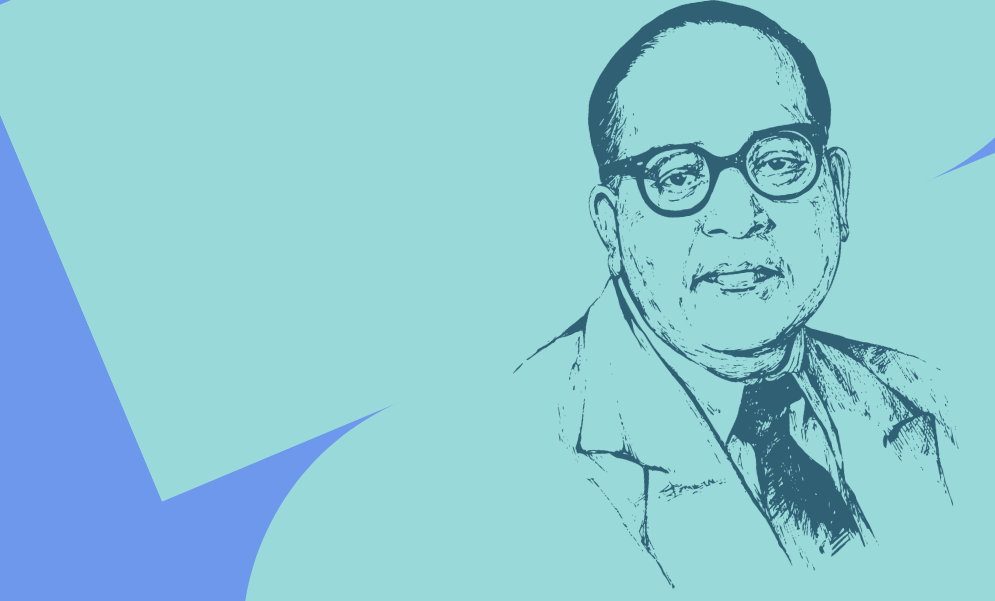
    It was around 2:30 am on 6 December 2021. I know, I was dreaming in a deep sleep. I was walking in heaven. Meanwhile, I saw Dr.Babasaheb Ambedkar reading the newspaper.

    I said, “Hello Sir, It’s more wonderful to see you physically than a book holding statue.”

    He replied sarcastically, “Oh really!”

    “Yes Sir” I answered undoubtedly and asked, “Can I have a Selfie with you Sir?

    I want to put it on my Insta story”

    “Yeah sure, why not buddy… ” He replied calmly. 

    I took 2-3 selfies from different angles and uploaded it as my Instagram story.

    I thanked him and started walking towards Mahatma Gandhi, a non-violent guy having millions of followers in the twentieth century. But suddenly Dr. Ambedkar called me back. 

    “Listen son, accept this book as a gift from my side”.

    I was not keen to take the book but I accepted it after looking at the faces of Nehru, Patel, Bosh and Baghat Singh who were just standing next to him.

    On the same day, a 12 hour Continuous Reading Programme was arranged by Ambedkar Student Organization in Fergusson College. I participated in that program because my girlfriend wanted me to join. And I choose to read the same book gifted by Ambedkar.

    He wrote,

    “The lack of education is the main cause for the backwardness of poor people. I strongly believe that education should be a priority of our society and utilized for the growth of individuals with character. 

                   Knowledge means light. This light lays the foundation of culture and civilization. Thus socialisation and moralization of man is the purpose of higher education. It is a base of society where the minds of the students are cultured. This is a factory of making good citizens. One should prefer humanistic education which enables a man to rediscover himself and ensure freedom rather than being a student of the church, school or the state. 

    I took a sip of water and continued my reading;

                    I want a type of education that not only inculcates awareness and fulfilment of human rights among citizens but also teaches human dignity, fraternity and justice. This will bring social, economic and political transformation of individuals. I’m a staunch opponent of casteism, untouchability, social discrimination, social inequality, women inequality and I consider education as an important tool to eliminate existing social inequality and injustice in Indian society. It will establish equality, brotherhood, co-existence and mutual acceptance in society. 

    He added, I remember delivering a lecture on 20th July 1942 at Nagpur. I said  “I measure the progress of a community by the degree of progress which women have achieved” and even today, I want to stress the same. Being a mother, she is nearest to the children in a family, and she is the child’s first teacher. They can incorporate positive values and virtues in their children. 

    The last page of the book gave me an idea of current challenges to New Education Policy (NEP), 2020. He said,

    My dear follows,  

    The ability to create something new, to find the answer of questions in a logical way, to express oneself with confidence, to put the inner ideas properly in front of an audience and the basic knowledge of the concepts are absent in the students. The students should be shaped as per the need and requirement of the society and nation. Thus, I suggest three main objectives for policy makers: recasting the aims and purposes of education, education as an instrument of substantive equality, and more focus on vulnerable sections of society like women, disabled, tribals and LGBT+.

    I do appreciate parliamentarians for enacting Fundamental Rights to Education, 2002 and including it into Article 21A of the constitution. 

    Not only this, an educated man without character and humility is more dangerous than a beast. If his education is detrimental to the welfare of the poor, the educated man is a curse to society… 

    I was getting bored but meanwhile,I got a cup of tea and biscuits. I tried to imitate his library incident, but I failed. So I continued reading. 

    He said-

    An important aim of education is to make a person capable of earning a living or making him self-dependent. Thus,in today’s world, I emphasise technical education more and consider it necessary for the rise of the deprived classes in society. If education is provided in the child’s mother tongue then it is easy for the child to understand. But at the same time he required each student to have knowledge of at least one foreign language. So that he can understand what is happening in the whole world. 

    I have great regard for my teachers. Role of a teacher in higher education is of utmost importance.  If we have good teachers, then we will be able to create a good civilization. A good teacher should have a positive and egalitarian attitude towards all sections of the society. Along with this I recommended that qualifications and other abilities of teachers should be checked exclusively while appointing them in schools or universities.

    To conclude, I’m a supporter of my mentor John Dewey’s view of democratisation and universalisation of education. This will make an inclusive and peaceful society. Ultimately, our country can make progress.

    After 12 hours of reading, I came back to the main gate. One note written on a piece of paper fallen from that book…

    The letters written on note were-

     “…Instead of building my statutes on your campus, build a good inclusive library.

     I will be really happy to be a member of that library!”              

    I remember, when I met him in a dream he was reading the newspaper’s top heading…

    “After election; 5,800 Cr will be allotted for building Dr.Ambedkar’s Biggest Statue”

    References

    1. Bhagyaya (2015) : Anupam Rashtra Bhagat. Panchjanya, April, 2015, pp. 16-20. 
    2. Government of Maharashtra, (1982) : Babasaheb Ambedkar: Writings and Speeches, Vol. 2. 
    3. Meshram, N.U. (2015) : Why is Education Important? (http://www.baiae.org/resources/articlesessays)
    4. Nithiya, P. (2012) : Ambedkar‟s vision on the Empowerment of dalit education. International Journal of Multidisciplinary Educational Research. 1 (2), 47-52